
Add engaging popups to your Webflow website
Popups and banners can showcase offers, highlight important content and prompt visitors to act. Here is how to add a Pagecloud popup to your Webflow site.
Updated May 8th, 2024

Why implement a popup strategy
Popups and banners can benefit your website and your business in a few clear ways.
- Enhance engagement Popups draw attention to key messages, offers and content so visitors engage more deeply.
- Increase conversions Well-timed, well-designed popups can persuade visitors to buy or subscribe.
- Collect valuable leads An excellent way to gather email addresses and contact details for future marketing.
- Improve the experience Done properly, popups provide timely, relevant information to visitors.
Getting started with your popup strategy
To implement a popup strategy on your Webflow website, follow these steps.
- Set clear objectives Pick the goal, whether that is boosting sales, growing your email list or promoting a new product. It guides your design and placement.
- Know your audience Understand what your visitors need and offer valuable incentives such as discounts, exclusive content or helpful tips.
- Design with care Keep popups easy to read, with a clear call to action, and make sure they complement your site without disrupting the visit.
- Test and refine Use analytics to track performance and make data-driven improvements.
Configure Pagecloud
To show a Pagecloud popup or banner on a site hosted elsewhere, you configure it in Pagecloud first, then add its code to Webflow.
- Configure your domain name
- Define the pages you want the popup to display on
- Copy the embed code to use on your site
Add your domain name
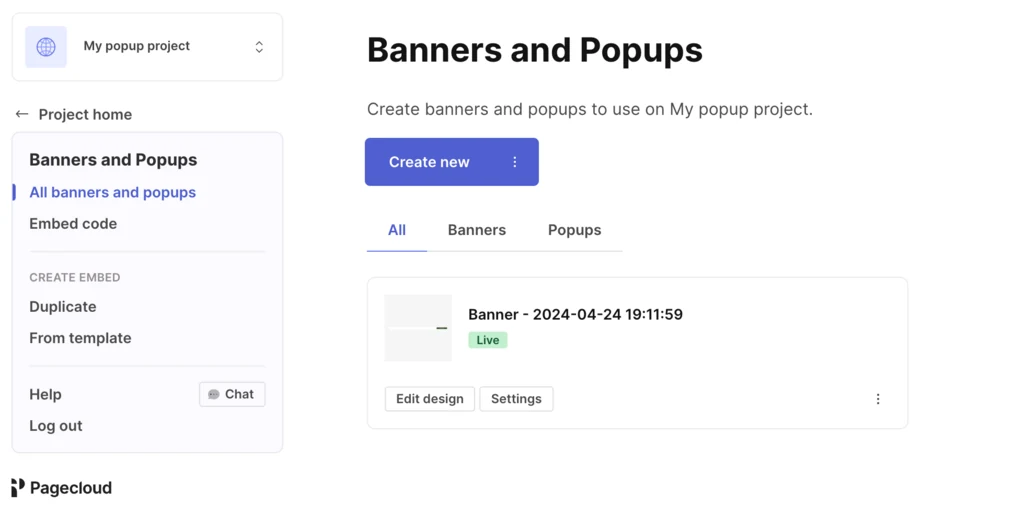
- Go to your Pagecloud dashboard.
- Select your project and click Banners and Popups in the left menu.
- Click Settings on your banner or popup.
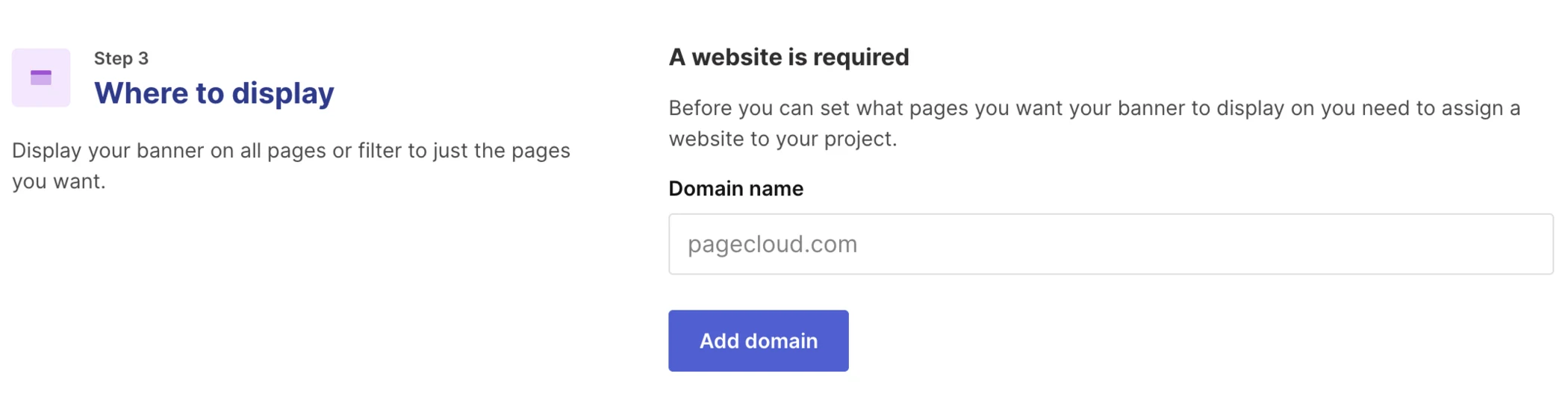
- In Setup, make sure you’ve connected your domain name in the Where to display section.
Select pages
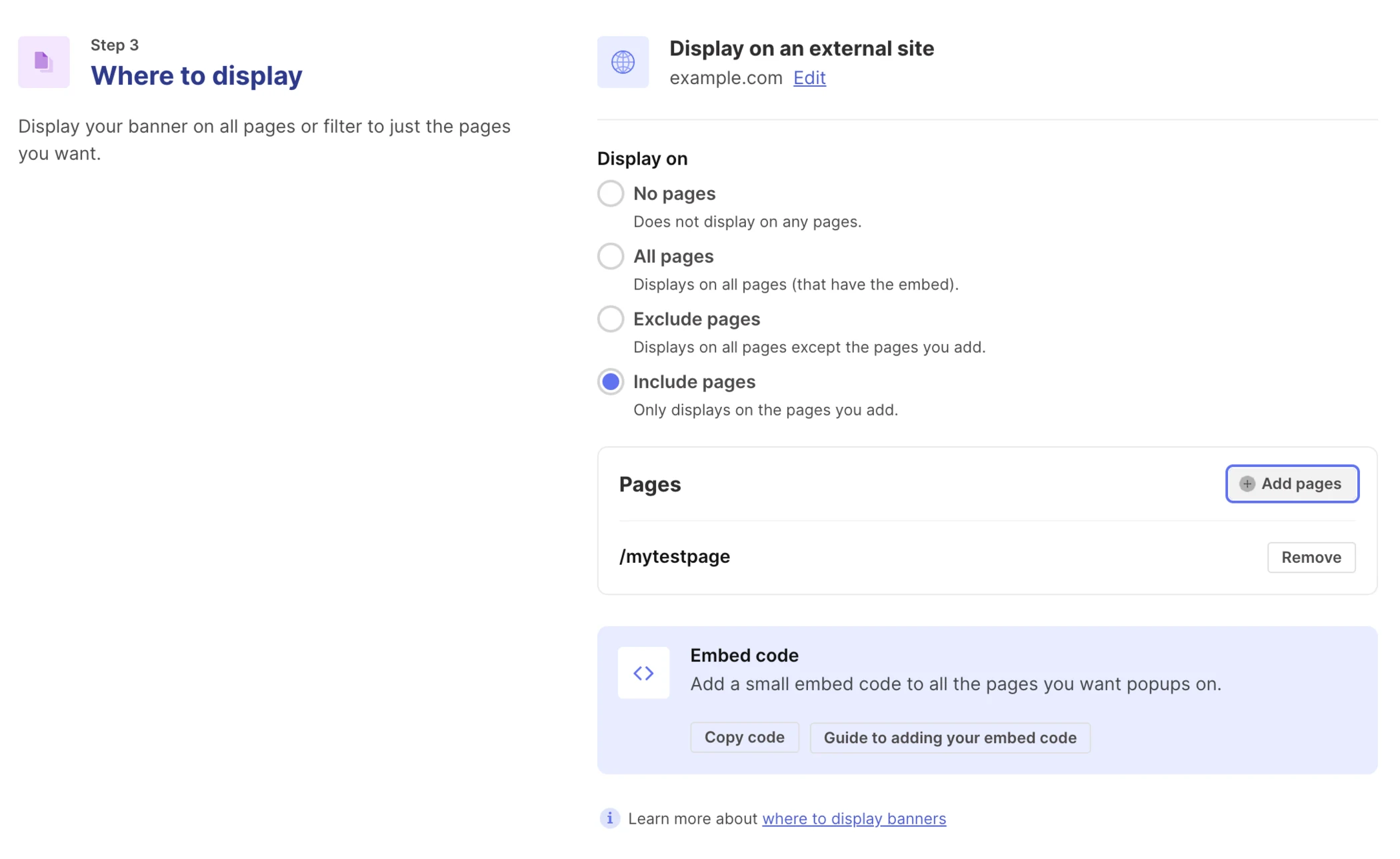
Once a domain is connected, choose the pages where the popup or embed displays: every page, or only some. We recommend Include pages, which lets you pick individual pages without making more updates to your website.
- Select Include pages.
- Click + Add pages.
- Add the name of your page.
You can also use wildcards in the form /mypage*,
which matches /mypage, /mypage2 and so
on.
Copy the embed code
Find your embed code in your Pagecloud dashboard, at the bottom of Setup or in the left toolbar.
Configure Webflow
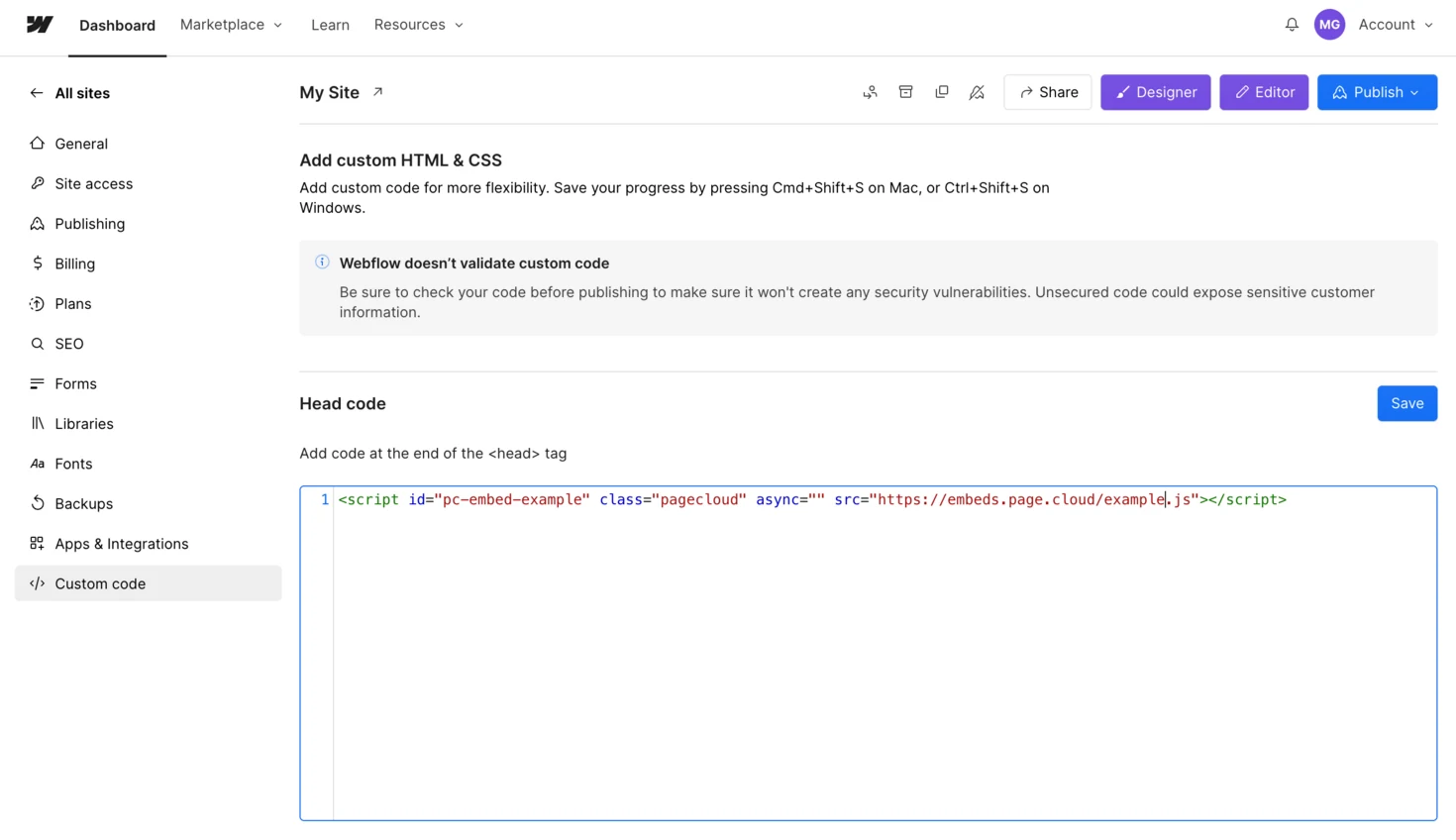
You can add a Pagecloud banner or popup to every page in your Webflow site from your site settings. Then you manage the appearance and location of the banner or popup from your Pagecloud dashboard, with no future changes to your Webflow settings. In the Webflow dashboard:
- Go to Site settings, then Custom code.
- Add your Pagecloud embed code in the Head code section.
- Click Save changes.
Don’t have a popup yet?
It’s easy to get started. No code required, easy to set up and we’re here to help along the way.
- Step 1 Choose a template Save time with a popup template that fits your needs. All templates are easy to customize.
- Step 2 Make it yours Set up how, when and where you want your popup to display, then customize the design to fit your brand.
- Step 3 Publish Publish your popup to your website, then watch your analytics and conversions roll in.
Frequently asked questions
How do I get started with Pagecloud Popups?
How do I build a Pagecloud popup?
How do I publish a Pagecloud popup?
Can I use Pagecloud Popups on an external website?
Do I have to change my Webflow settings every time I change pages?
Your next popup is a template away.
Pick a design, make it yours and publish it from your Pagecloud account.